
We Work Hard, We Party Harder
January 16, 2019

Stay informed by subscribing to RTDS newsletter!


Dialer, by definition, is a device or software to make calls. However, dialers of today are equally capable of handling other modes of communication as well, like emails, SMS, and voice mails. Some are even advanced enough to synchronise communication on social media platforms too.
Also, dialers do not merely make calls. It, when transitioned for blended call centres, can receive calls as well. So, the dialers that are specifically optimised for making outbound calls are called outbound dialers.
In this blog, we are going to list down everything one needs to know about Outbound Dialers. First of all, let’s have a brief definition before moving on to other details.
An outbound dialer is an example of computer telephony integration (CTI) which is used to make calls, usually for reaching prospects or delivering customer service. CTI is a type of technology used for integrating computers and telephone systems in call centres to increase efficiency and reduce costs.
Call centres need automation for making large volumes of outbound calls. Automating calling operations minimise stress on employees meanwhile earning more revenue. Using an outbound dialer benefits in two ways – improved call centre agent performance and reduced their idle time. When integrated with CRM, outbound dialers also aid lead management and consolidate customer data as well.
Now that we have an understanding of what is an outbound dialer, let’s move on to the working of an outbound dialer.
Modern outbound dialers are VoIP based which eliminates the requirement of physical equipment. They are either in the form of a software installed on a computer or an application hosted over cloud. These hosted dialers are easy to set-up and require only minutes for installation. They can start calling by just using a computer, a headset, and internet connection.
Call centre caters to a range of services to different industries which require specific calling campaigns. Call centre managers create these campaigns, assign agents to them and define rules according to the requirement. Outbound dialer software, then, select which numbers to call from the list based on the pre-set rules.
Before connecting to live agents or playing a recorded message, outbound dialer filters out unproductive leads. It connects agents to only those calls which are answered by an actual person. Further, as soon as a call ends, the dialer connects to the next contact. Advanced outbound dialers start dialing following numbers even before the current calls end, generally known as predictive dialing.
Now, depending upon various features and properties, outbound dialers are categorised into different types. Outbound dialing, campaign management, contact preview, call recording, call monitoring, list management, and filter-based calling are some of its essential features. Let’s study different types of outbound dialers used for specific campaigns and business requirement –
Based on the features mentioned above, outbound dialers are categorised into – Preview Dialers, Power Dialers, and Predictive Dialers.
An outbound call centre has several applications like lead generation, debt collection, customer support, market research and feedback surveys. Depending upon the type of business and domain, outbound dialing processes are used to bring benefits in call centre operations. The main benefits of outbound dialers are listed below:
As against manual dialing, outbound dialers nowadays, automate the dialing which enhances operational efficiency and brings accuracy in call centres. It also filters busy signals, voicemails and no response numbers before connecting to a live agent.
Based on predefined rules, an outbound dialers drops numbers that do not fit the criteria and hence eliminate random calls. It can also detect the area code and dials only during the office hours of that geographic location.
Another benefit of outbound dialer is that it reduces the idle time between two calls meanwhile increasing the time on live calls. Advanced outbound dialers like predictive dialers have such features which predict the number of consecutive calls for each agent and appropriate time to start dialing. It increases the connection ratio and productivity of agents as they spend more time talking.
Preview dialers enable agents by priming them about prospects before calling. Having enough information, agents get empowered to engage the customer better and create higher chances of conversion. They reach a better position to personalise the conversation and deliver better customer services.
Call centre managers and agents have access to call data and reports which can be used to derive useful insights. Supervisors can listen to previous call recordings to prepare more effective calling scripts and train agents. Real-time monitoring dashboard enables managers to keep a track of all call centre activities and key metrics.
After considering the above aspects about outbound dialers, one cannot ignore that dialers lie at the core of an outbound call centre. Different industries have specific requirements of outbound dialers and thus, these are available in many types. Hence, before investing in call centre technologies, businesses must know how to choose the right dialer.

AceCloud (a brand of Real Time Data Services) has announced the launch of its enterprise-class...
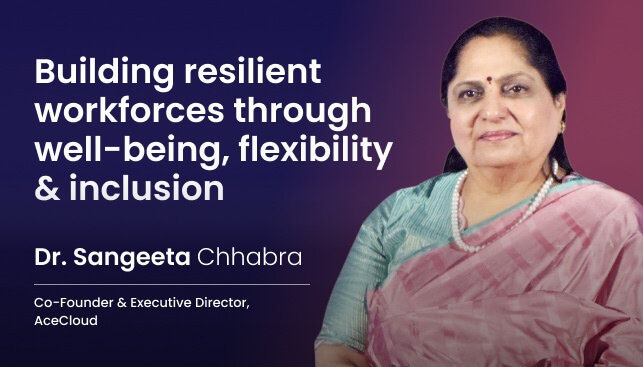
Dr. Sangeeta Chhabra, Co-Founder and Executive Director of AceCloud, a brand of Real Time Data Services,...

Mr. Vinay Chhabra, Co-Founder and Managing Director of AceCloud, a brand of Real Time Data...